
Gambia Classes for Open Learning (GCOL) — Luminos Foundation
Luminos Foundation
Overview
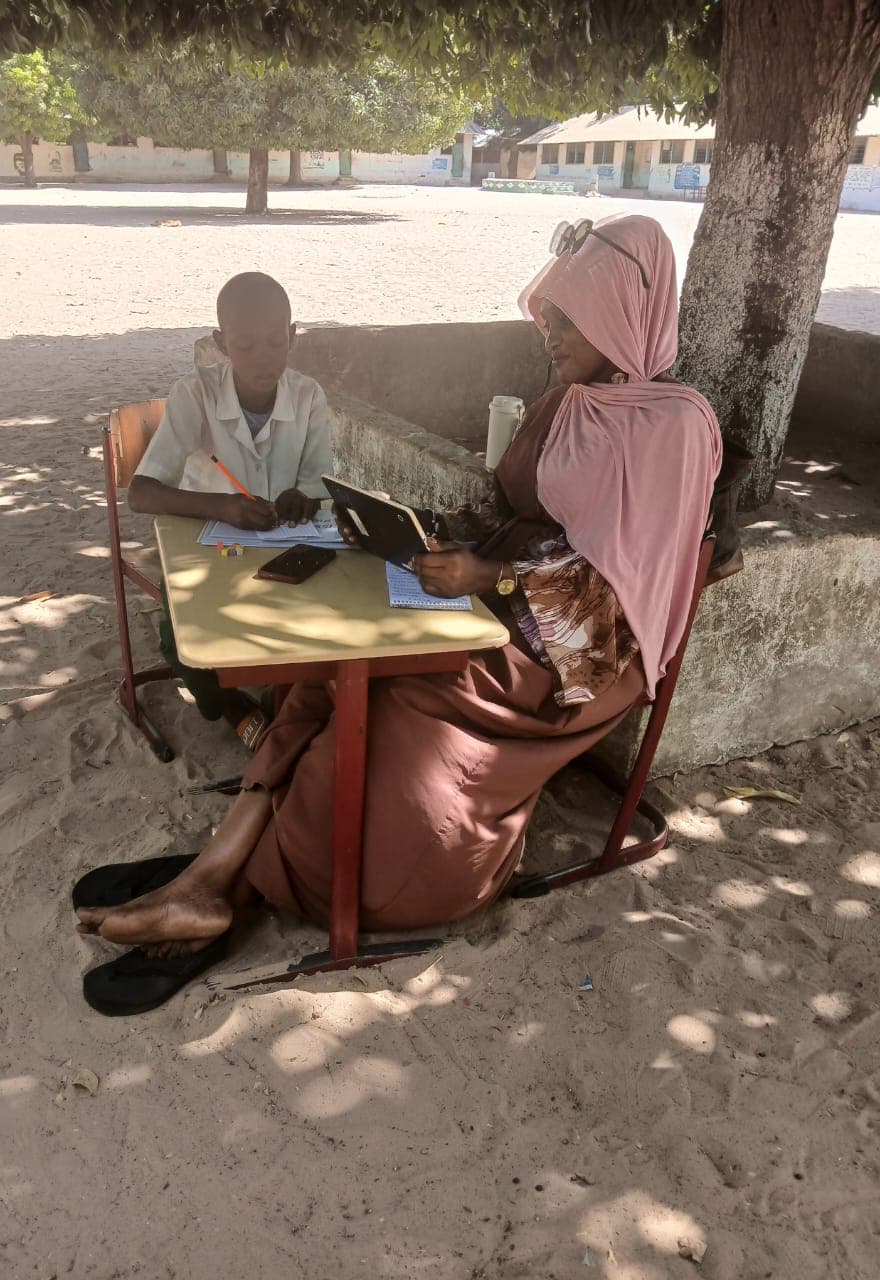
The Luminos Foundation operates the Gambia Classes for Open Learning (GCOL) programme, providing accelerated learning opportunities for out-of-school children. 2M Corp was engaged to conduct EGRA and EGMA assessments — internationally recognised tools for assessing foundational literacy and numeracy in early primary grades — for the GCOL programme.
Over two programme years, 2M Corp assessed approximately 900+ students across six rounds (baseline, midline, endline each year). Year 1 covered around 300+ students; Year 2 expanded to 600+ reflecting programme growth. Rigorous quality protocols included gold standard tests during training to calibrate scoring, and inter-rater reliability tests during live collection where two assessors independently scored the same student.
Assessment administrators were recruited and trained on standardised EGRA/EGMA protocols including timing procedures, scoring rubrics, and child-friendly assessment techniques.
Impact
The assessments provided Luminos with rigorous, internationally comparable data on learning outcomes across two full programme years, enabling tracking of individual student trajectories and evidence-based evaluation of programme effectiveness.
Services Delivered
Technologies Used
Gallery
Related Projects

World Bank DIME / WFP
School Feeding Impact Evaluation
A year-long, multi-round high-frequency data collection across approximately 90 schools for an RCT evaluating the impact of home-grown school feeding on student nutrition, cognition, and academic achievement.
Effective Intervention / MoBSE / World Bank
MEISS Baseline & Midline Education Evaluation
Technical support for a quasi-experimental impact evaluation of structured pedagogy across approximately 120 schools, including EGRA/EGMA instrument development, daily data quality control, and deployment of HoneyGuide for real-time monitoring.

Kanifing Municipal Council / University of Essex
Open Location Codes Research — KMC & University Consortium
Baseline and endline surveys of 4,000 households for an RCT evaluating the impact of digital addressing systems (Google Plus Codes) on property tax compliance, municipal services, and waste management.